If you want a neighborhood that feels tucked away without feeling cut off, Rollingwood deserves a closer look. For many buyers, the challenge is finding a place near central Austin that still feels calm, established, and easy to live in day to day. Rollingwood offers that balance with a very small city footprint, mostly single-family homes, nearby parks, and quick access to major Austin destinations. Let’s dive in.
Why Rollingwood Stands Out
Rollingwood is an incorporated city in Travis County on the west bank of Lady Bird Lake, between West Lake Hills and Austin. The city describes itself as a 0.8-square-mile landlocked community with just over 1,500 residents. It is also about four miles southwest of downtown Austin, near MoPac and the Bee Caves Road corridor.
That location shapes much of daily life. You get a small residential setting with direct access to central Austin recreation and job centers. For buyers who want a close-in address without living in a denser urban neighborhood, that can be a major draw.
Rollingwood’s Small-Town Feel
One of the clearest themes in Rollingwood’s planning documents is the value residents place on preserving a small-town character. The city is fully built out, and local planning reflects a strong preference for low-density, single-family neighborhoods, mature trees, and an established residential feel.
In practical terms, that often means your experience in Rollingwood feels more neighborhood-centered than high-growth and fast-changing. Streets are described as wide, tree-lined, and yard-oriented. The city also highlights everyday activity like walking dogs, biking, and using neighborhood streets for exercise.
Housing in Rollingwood
If you are browsing homes in Rollingwood, it helps to understand that this is not a large new-construction market. According to the city’s comprehensive plan, single-family residential makes up 69.4% of land use, and vacant parcels account for only 1.7%. That points to a market where most opportunities involve existing homes in an established setting.
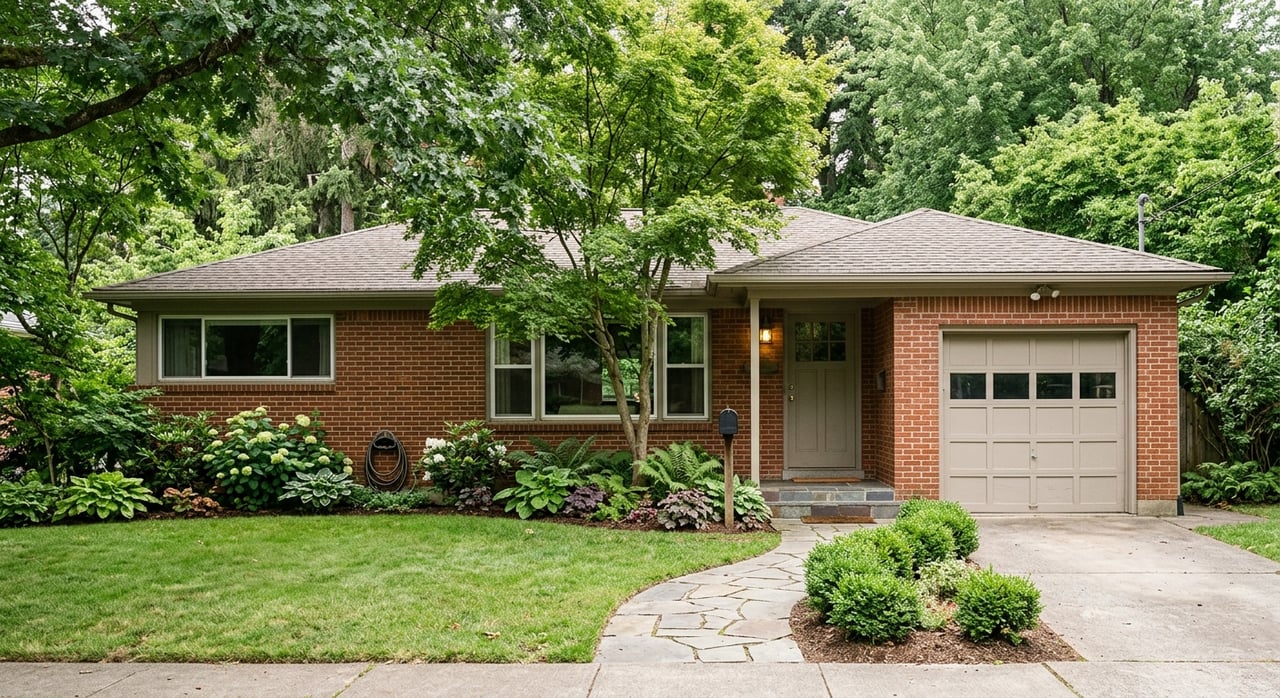
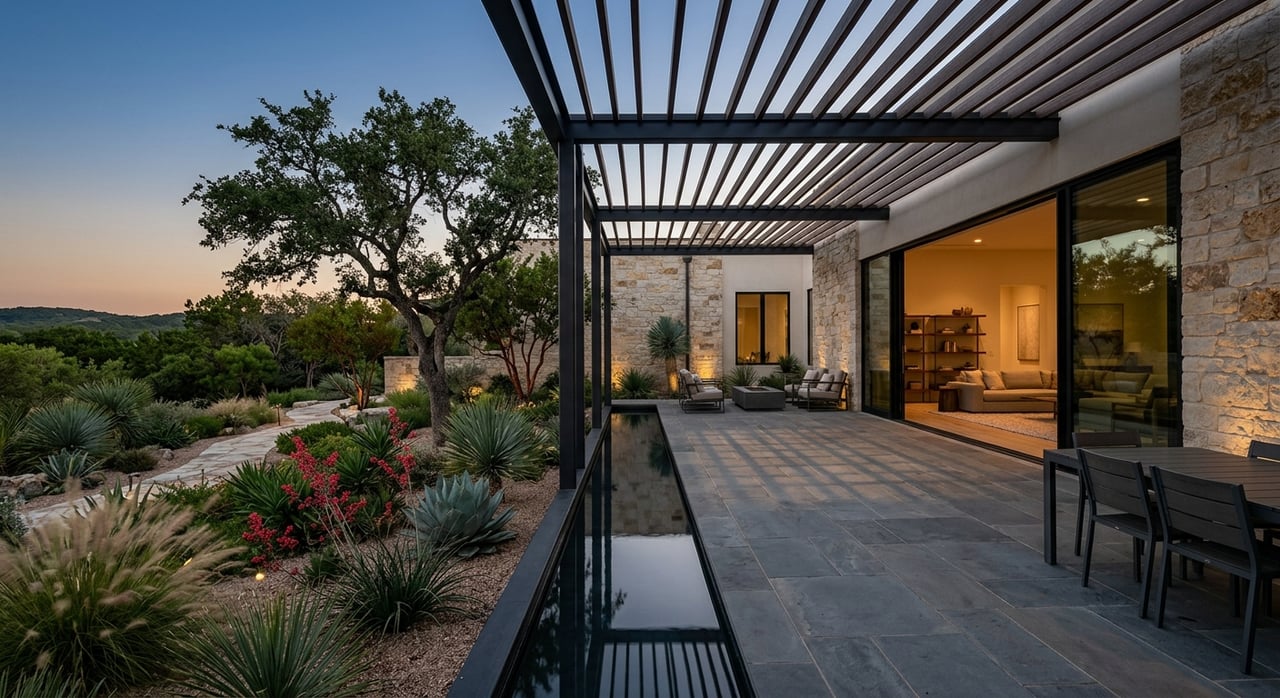
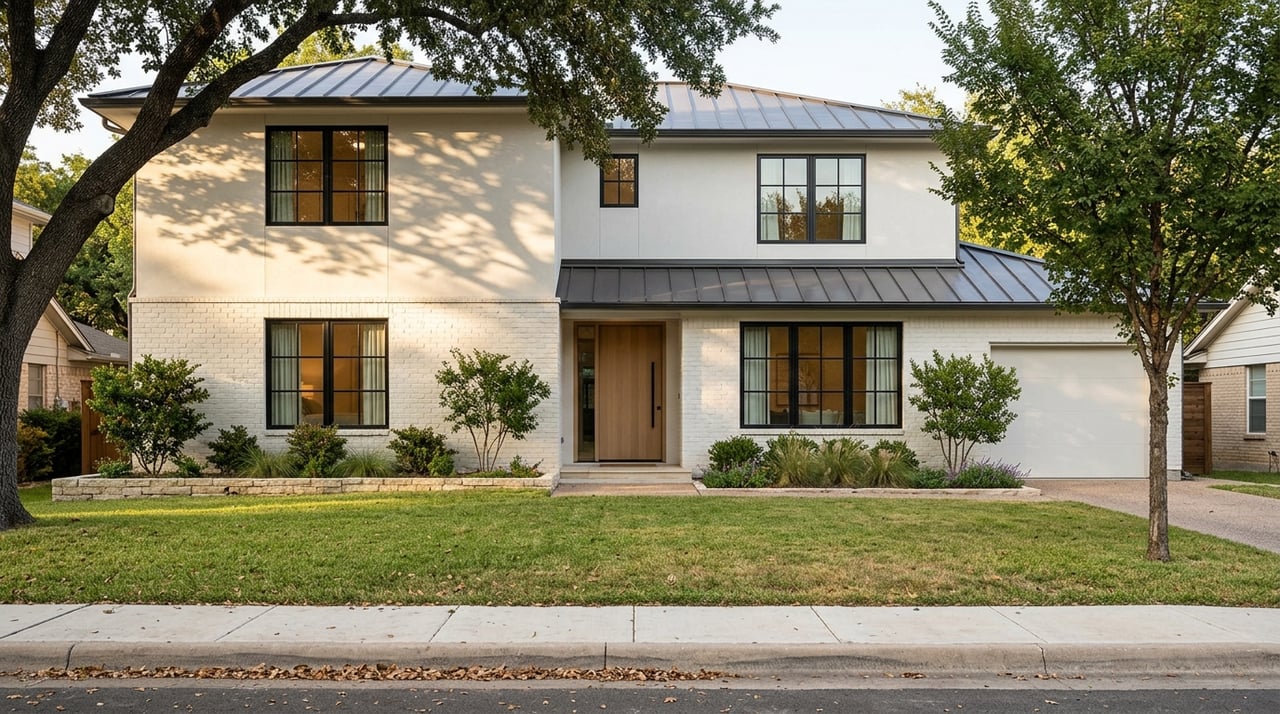
The housing character is shaped by lot-to-lot evolution rather than a wide mix of product types. Some older homes retain much of their original character, while newer residences are often one- to two-story masonry homes with more contemporary forms and larger glass elements. That mix can create variety from one block to the next, even within a consistent neighborhood pattern.
For buyers, limited supply is an important part of the equation. In a built-out community like Rollingwood, inventory can be more constrained than in newer suburban areas. That is one reason it helps to be clear on your priorities, your budget, and your contract strategy before you start competing for a home.
What Daily Life Looks Like
Rollingwood’s appeal is not only about where it is. It is also about how it lives. The city’s own descriptions point to a quieter daily rhythm centered on residential streets, local routines, and community spaces.
Rollingwood Park is a big part of that rhythm. Located in the heart of the city, the park includes upper and lower sections with playground equipment, swings, a pavilion, a community garden, ball fields, adult exercise equipment, and restrooms. It is open from dawn to dusk, and the city also offers facility rentals.
Many of the errands and quick outings that shape normal life are tied to Bee Caves Road. Rollingwood’s comprehensive plan identifies Bee Caves Road as the city’s major commercial corridor, with retail, family-owned businesses, professional offices, banks, and low-rise office buildings. That means you can enjoy a mostly residential setting while still having nearby options for everyday convenience.
Close to Austin Favorites
Rollingwood is especially appealing if you want fast access to well-known Austin recreation areas. The city highlights its proximity to Zilker Park, Barton Springs Pool, the Nature & Science Center, Auditorium Shores, Zilker Botanical Garden, Lions Municipal Golf Course, and the Barton Creek Greenbelt.
That level of access matters because it expands your lifestyle options without requiring a long drive. You can live in a small community while staying close to trails, green space, outdoor recreation, and downtown-adjacent amenities. For many buyers, that is a rare combination.
Commute and Connectivity
Location is one of Rollingwood’s strongest practical advantages. Its position near MoPac and Bee Caves Road helps connect residents to downtown Austin and other regional destinations. In the broader Austin area, major employment has historically been tied to government, education, and later high-tech growth, so close-in access can be meaningful for many households.
At the same time, no close-in market is without tradeoffs. Rollingwood’s comprehensive plan identifies traffic as a recurring concern, especially around key corridors. Buyers who value the location should weigh that convenience alongside the realities of commuter pressure on nearby roads.
Development Expectations in Rollingwood
If you are hoping for a place that is likely to keep its established character, Rollingwood may appeal to you for that reason as well. The city is already fully built out, and residents have expressed support for preserving neighborhood character rather than adding dense new development.
Planning documents show support for improved retail and restaurant options along Bee Caves Road. At the same time, residents did not support hotels, apartment complexes, or large condominium projects in that corridor. That tells you something important about the city’s long-term direction and what many locals value most.
What Buyers Should Keep in Mind
Rollingwood can be a strong fit if you want:
- A very small city setting near central Austin
- Established single-family homes instead of a master-planned new-build environment
- Easy access to parks and outdoor recreation
- Nearby retail and services along Bee Caves Road
- A neighborhood feel shaped by mature trees and low-density housing
It may require more thought if your priorities include:
- A large range of housing types
- Frequent new inventory
- A more urban, mixed-use environment
- Minimal traffic around major corridors
When inventory is limited, the details of your offer can matter as much as the price itself. In a market like Rollingwood, buyers often benefit from having a clear plan for timing, terms, and inspections before the right home appears.
School Boundary Check Matters
If schools are part of your home search, be careful about making assumptions based on city name alone. The Eanes ISD boundary map includes Rollingwood, but the district instructs families to verify attendance by exact address using Travis County appraisal records and the district’s SchoolSearch tool.
That means school zoning should be treated as property-specific. If you are comparing homes, this is one of those details worth confirming early so your decision stays grounded in accurate information.
Is Rollingwood Right for You?
Rollingwood offers a specific kind of Austin-area lifestyle. It is small, established, close to downtown, and shaped by single-family homes, local park life, and quick access to some of Austin’s best-known outdoor destinations. It is not trying to be the biggest, newest, or busiest place in the region, and that is exactly why some buyers are drawn to it.
If you are considering a move here, it helps to approach the process with both lifestyle goals and transaction strategy in mind. In a close-in market with limited supply, you want to understand not just what makes a neighborhood appealing, but also how to compete smartly when the right property comes up.
If you want help evaluating homes, comparing options, and protecting your position through the contract process, Keeping It Realty can help you move forward with clarity and confidence.
FAQs
What is it like living in Rollingwood, Texas?
- Living in Rollingwood means being in a very small incorporated city near central Austin with an established residential feel, mostly single-family homes, nearby parks, and quick access to Bee Caves Road, MoPac, and major Austin recreation spots.
How close is Rollingwood to downtown Austin?
- Rollingwood is about four miles southwest of downtown Austin, according to the city’s 2022 comprehensive plan.
What types of homes are common in Rollingwood?
- Rollingwood is primarily made up of existing single-family homes in an established neighborhood setting, with a mix of older homes and newer one- to two-story masonry residences.
Does Rollingwood have parks and outdoor amenities?
- Yes. Rollingwood Park is the city’s main public gathering space, and the city also highlights nearby access to Zilker Park, Barton Springs, the Barton Creek Greenbelt, and other central Austin outdoor destinations.
Is Rollingwood a walkable neighborhood?
- The city describes Rollingwood as a place where residents walk dogs, bike, and use neighborhood streets for exercise, though planning documents also note that residents want better walking and biking connections to the commercial corridor.
How should buyers verify school zoning for a Rollingwood home?
- Buyers should verify school attendance by exact address using Travis County appraisal records and the Eanes ISD SchoolSearch tool rather than assuming zoning based only on the city name.